
Scandal in Ankara: Official Reception for a Sanctioned pro-Russian Chechen Figure
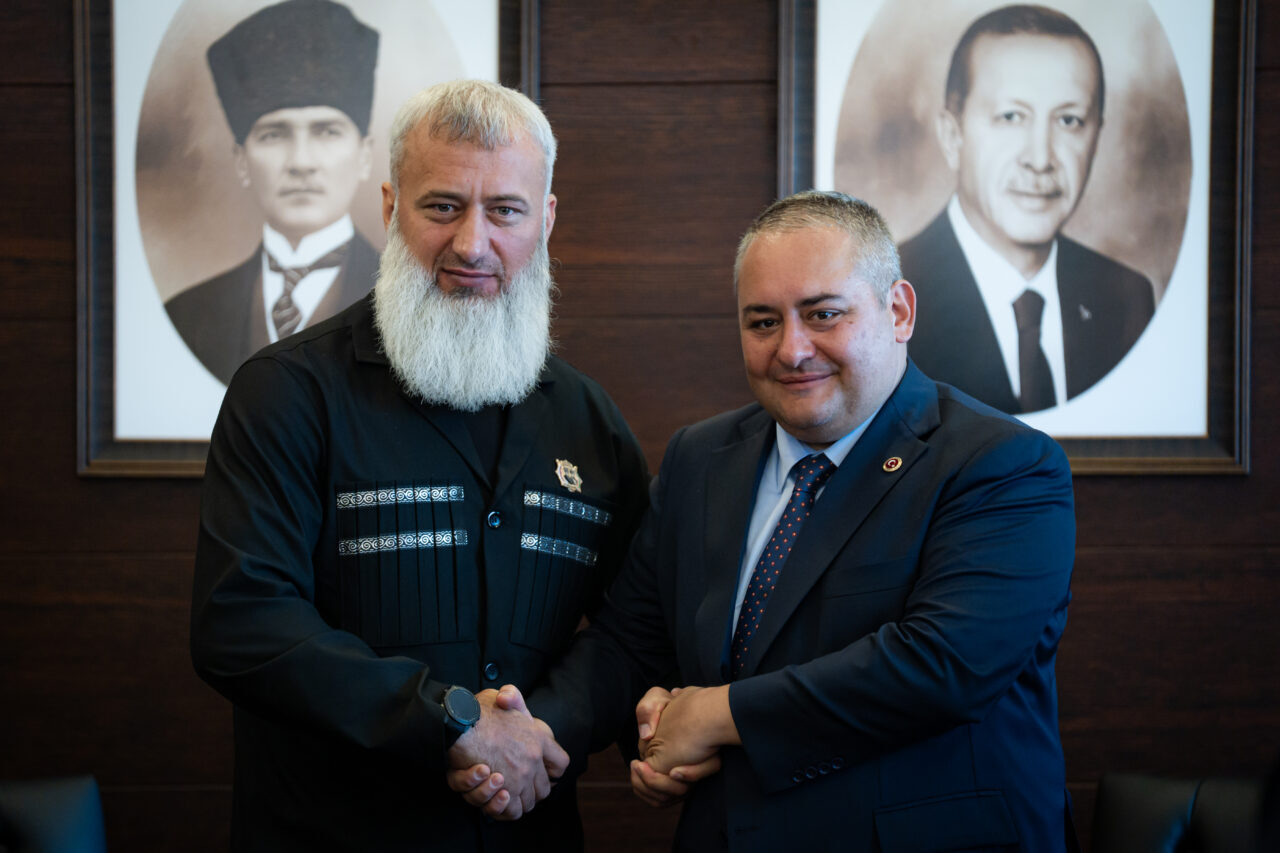
The international wrestling championship organized by Keçiören Municipality in Ankara, Turkey, between August 14 and 16, 2026, became the scene of developments that could trigger a major crisis in diplomacy, public conscience, and the international arena, rather than simply being a sporting event. Zamid Chalaev was among the delegation accompanying world-renowned Chechen athletes invited to Ankara for the championship. Chalaev is described as one of the prominent commanders of the pro-Russian Chechen regime and is reportedly subject to international sanctions over alleged involvement in human rights abuses and war crimes.
According to claims circulating in Ankara’s political corridors, the substantial fees demanded by the invited Chechen athletes, as well as all travel and accommodation expenses for the delegation, were fully covered by Ramzan Kadyrov, who leads the pro-Russian Chechen regime. Reports further allege that this sponsorship was arranged in connection with a plan for Keçiören Mayor Mesut Özarslan to open a public park named after Akhmat-Haji Kadyrov, thereby potentially contributing to the Kadyrov regime’s efforts to gain political legitimacy in Turkey.
During an official reception at the municipality building on August 16, Mayor Mesut Özarslan met with members of the pro-Russian Chechen delegation. He was photographed shaking hands with Zamid Chalaev, described as a commander of the Akhmat Kadyrov Special Police Unit, as well as Magomed Khambiyev, who has reportedly made hostile statements regarding Turkey, and Ibragim Akhmatov, a deputy in the pro-Russian Chechen administration. Emphasizing the historical and fraternal ties between the Turkish and Chechen peoples, Mayor Özarslan publicly announced plans to open the “Akhmat-Haji Kadyrov Park” in Keçiören.
Beyond the announcement concerning the park, Zamid Chalaev – who was reportedly included in the official delegation and seated in the front row of the protocol area during the event -stands out as a figure subject to sanctions imposed by the United States, the European Union, the United Kingdom, Switzerland, Canada, Japan, and Ukraine.
Some sanctions-law experts argue that Chalaev’s presence at an official municipal event could potentially trigger scrutiny of the municipality or individuals involved, depending on the applicable sanctions regimes and the nature of any transactions or assistance provided. Such scrutiny could, in principle, result in enhanced compliance reviews involving international banking transactions. However, claims that the municipality would automatically face SWIFT restrictions, suspension of EU, World Bank, or EBRD projects, or personal visa and asset-freezing measures would require specific legal and factual grounds.
Mayor Özarslan’s announcement that a park in Keçiören would be named after Akhmat-Haji Kadyrov, a prominent figure associated with the pro-Russian Chechen regime, under the justification of “historical ties,” has drawn sharp criticism across the political spectrum.
The deep-rooted bonds between the Turkish public and the Chechen people stem in part from the approximately 160-year history of the Chechen diaspora in Turkey and from widespread respect among parts of the community for historical Chechen independence figures such as Dzhokhar Dudayev, Aslan Maskhadov, and Shamil Basayev. By contrast, Akhmat-Haji Kadyrov and his son, Ramzan Kadyrov, have denounced these figures while aligning themselves with the Kremlin.
The reception and park announcement have sparked intense debate in Ankara’s political circles. Political speculation suggests that Mayor Özarslan, who has had a turbulent political trajectory, may have been influenced or maneuvered by a “clandestine faction” within his administration. Some commentators argue that the creation of an international sanctions controversy and the resulting domestic backlash could be part of an effort to embarrass the ruling AK Party, disrupt Turkey’s delicate foreign-policy balance, and undermine President Recep Tayyip Erdoğan.
Political analysts note that conservative and nationalist voters in Turkey may be particularly resistant to the idea of a public park being dedicated to a figure associated with the pro-Russian Chechen regime, describing the move as a form of “political suicide” for local administrators.
How President Recep Tayyip Erdoğan and his party organizations will respond to the proposed “Kadyrov Park”, and what administrative and political consequences the decision may produce, are now being closely watched. The controversy comes at a sensitive point for Turkey’s relations with Russia, its historical ties with the Chechen diaspora, and its approach to international sanctions regimes.