Chechen ethics has three levels: 1) Adamalla (humanity) – the system of universal human norms; 2) Nokhchalla (this word literally means “Chechen-ness”) – the system of particular Chechen norms; 3) Konakhalla (“konakh” means “noble man”, “konakhalla” is what makes him such) – the system of the highest ethical norms.
A long time ago, there once lived a husband with his wife. Every morning the husband put his wife up against the door, put an egg on her head and shot it with his rifle. The man’s wife to be sure was scared lest a bullet should hit her but she did not confess this to her husband. Seeing the difficult position she was in, she somehow managed to get the attention of an old wise woman and told the old hag everything.
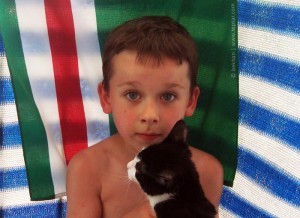
The website, Teptar has published an interesting conversation between a 5-year old Chechen boy in exile, and his grandfather. We present you this conversation, both in Chechen and English.
Although humanity shares a common wisdom reflected in the proverbs and sayings of all nations, those of the peoples of the North Caucasus have their own paritcular value, stemming as they do from an ancient and rich multi-ethnic region that has been almost completely negleted by Western scholars and thinkers. The difficult terrain has both fostered and protected wisdom traditions, which, until recently, have been in abeyance in the Western world.
Dreams will stimulate my mind, and I’m trying to understand the state of internal and external peace, they find a direct reference to past and future. I do not have Present Time. I stayed there, on the the War.
In this age of information technology and artificial intelligence problem of the formation of collective and national identity came to the fore and became the subject of current research worldwide. It employed anthropologists, historians, philosophers, psychologists, sociologists, educators, critics and religious leaders.
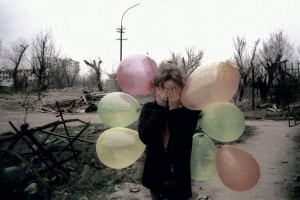
The city which is not present on Earth! Did you hear of such? But I was there. The city of my love died. I went for a walk on the stranger for me streets of dead city. No, people were there. But there was not the soul. Not single soul.
Apti Bisultanov experiments with both traditional Chechen literary genres and free verse. Bisultanov, who has fought as a partisan in Chechnya, is of the opinion that religion and poetry cannot be kept apart.
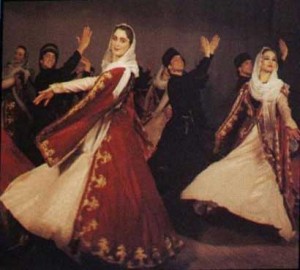
It is hard to convey the power of his dancing in words. People call him the “Chaliapin of the dance”, “Paganini of the dance”, “Stradivarius ıf the dance”, and it isn not surprising. Everywhere people love him as they love sunshine and beauty. He gets round after round of applause wherever he dance: in Moscow theatres or in distant Brazil, in a tiny mountain village or sun-bathed India. Who is he, this wizard who has come to know the spirit of the dance, who is this man about whom legens spring up?
The monograph by historian Dr. Lechi Garsaev, is the first work devoted to Vainakh women’s clothes. It is based on real dresses, which are being compared with those worn by people of neighbouring regions.
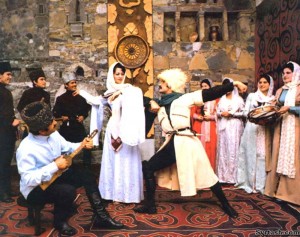
The Chechen word for “wedding” is translated as “play.” Wedding stands for a succession of live shows, singing, dancing, muiscal and pantomime numbers.
The word “Nokhchallah” does not lend itself to translation. But it may and must be explained. “Nokhcho” stands for Chechen. “Nokhchallah” brings together all the specific properties of the Chechen character. It implies a whole gamut of moral and ethical norms. It may be described as the Chechen code of honor.
The traditional Chechen marriage ceremony, like their other folk customs has always been in its secretive cohesion. It included sing-songs, dance, music, pantomime and narration, which altogether produced a whole spectacle.
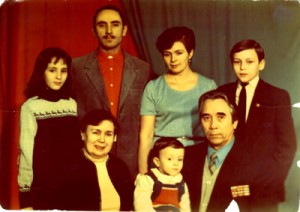
The first thing a Chechen asks on meeting anyone is “How is your family? Are all of them safe and sound?” A well-mannered person will inquire, before taking leave, if there is “anything he could do to help.”
Respect of elders. Every Chechen family, without a single exception, respects and cares about the elder generations of its members, in particular about the parents.